On January 1, 2026, VAT was reinstated on car customs clearance, and the electric car market immediately responded with a dramatic drop in imports. The collapse looks even more striking when compared to the excitement of December.
The dynamics of the first month of 2026 were analyzed by the Automotive Market Research Institute. Experts call this decline a "classic electric hangover," when the market redistributes the surpluses obtained at the end of the previous year.
The situation in different market segments
Only 1,374 used electric vehicles were imported into Ukraine in January. This figure is 94.5% lower than in December last year, confirming the largest decline in this segment. The annual decline is 53.7%.
Only 864 new cars were imported. This sector fell by 85.2%, although the annual dynamics show a more encouraging picture: compared to January 2025, the first month of 2026 showed an increase of 35.6%.
Against this backdrop, the domestic market for reselling electric cars appears to be the most stable. During the month, 3,553 deals were concluded, which is 17% less than in December. However, compared to the same period in 2025, the segment grew by 105%, which may indicate the maturity of the secondary market and its immunity to the situation at customs.
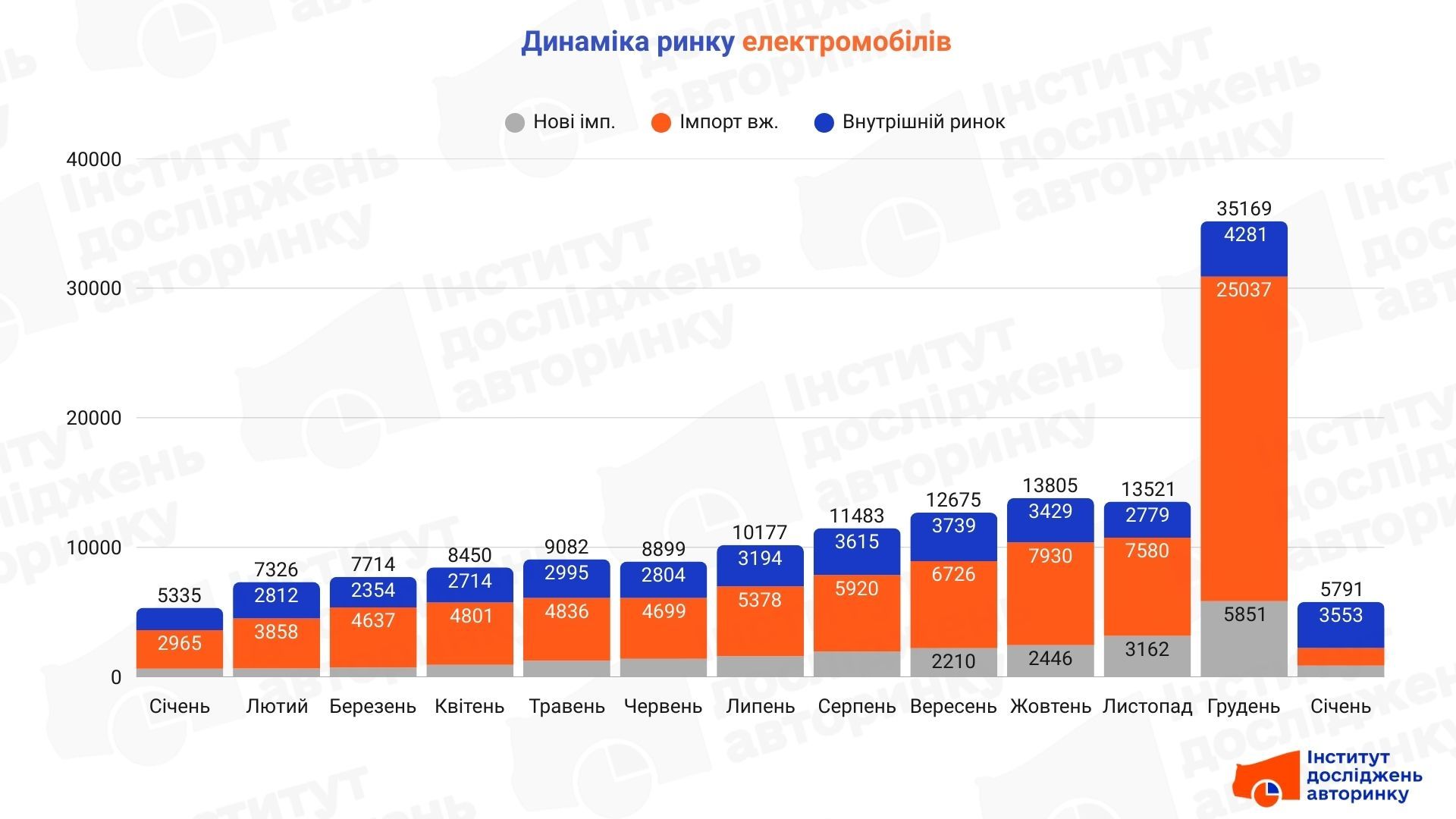
Source: Institute of Automotive Market Research.
Reasons for the anomaly
The decisive factor in the collapse of electric car imports was the return of VAT payments during customs clearance. This reason also explains the extraordinary activity in December, when everyone who wanted to buy an electric car rushed to do so before January 1.
The market decline in January is also a sign that the market is looking at the new rules of the game. Of course, imported cars are expected to become at least 20% more expensive. How buyers and carriers will react to this will become clear in the coming months.
While customs fluctuations continue, the secondary market is a kind of island of stability. It is not subject to VAT, so demand has shifted to the resale of cars within Ukraine. The Institute notes that the annual growth of 105% in this segment indicates a reorientation towards domestic resources.
However, VAT is not the only factor that caused the market to decline. Car owners have become more cautious about buying electric cars due to large-scale problems with energy supply, abnormal winter frosts, and the rising cost of charging cars at EV charging stations.
“The game of 'saving on electricity' currently works only for those who have their own socket with a night tariff. For everyone else – it’s math with too many unknowns. In order for the market to return to the activity of 2025, at least one of these factors must lose its severity, otherwise the 'electric boom' risks becoming a niche story for private homeowners,” emphasized automotive expert Ostap Novytskyi.
Forecasts for the future
According to preliminary estimates by experts at the Automotive Market Research Institute, the decline in imports may continue in February and March, while dealers still have stocks of electric cars imported before January 1. Then imports will inevitably resume.
Demand in Ukraine has not disappeared, as confirmed by the growth of the new imported car segment compared to 2025, as well as the unexpected growth of the domestic market despite the holidays and the New Year lull.
“This confirms our thesis: the abolition of tax benefits did not kill interest in electric vehicles, but simply changed its direction. Now, buyers are looking for bargains within the country, depleting the stock of cars imported with zero VAT. Essentially, the domestic market has become a temporary buffer, restraining the overall decline in interest in the segment,” said Stanislav Buchatskyi, head of the Institute of Car Market Research.
EcoPolitic previously reported on the increase in tariffs at public electric charging stations and the reasons that have affected the cost of energy for electric vehicles.