Almost 50 hectares of state forest land have fallen into private ownership in the Zaturtsiv community in Volyn Oblast. Only a few of the owners are local residents.
The investigative journalism center "Sila Pravdy" (Power of Truth) investigated who received the plots and how, and what mistakes were made by the State Geocadastre.
Back in 2021, land in the Zaturtsiv community was generously distributed into private ownership. This refers to a wooded area between the villages of Zapust and Ozyutychi, which was "divided" into 24 plots of 2 hectares each. The decision was supported by deputies of the Zaturtsiv village council.
Judging by the repetition of surnames, the plots went to relatives. It is noteworthy that the head of the village, Oleksandr Halyak, claims that he knows only seven of them who are local residents. He justifies the distribution of land to "outsiders" as follows:
"The fact that people from Lutsk received land here is not prohibited by law; they can even write statements to us from Kyiv. We had no reason to refuse them."
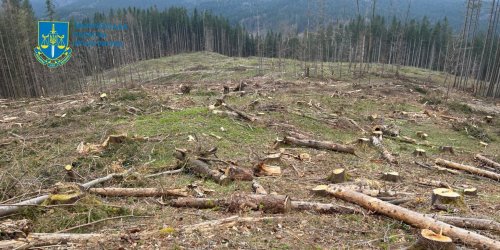
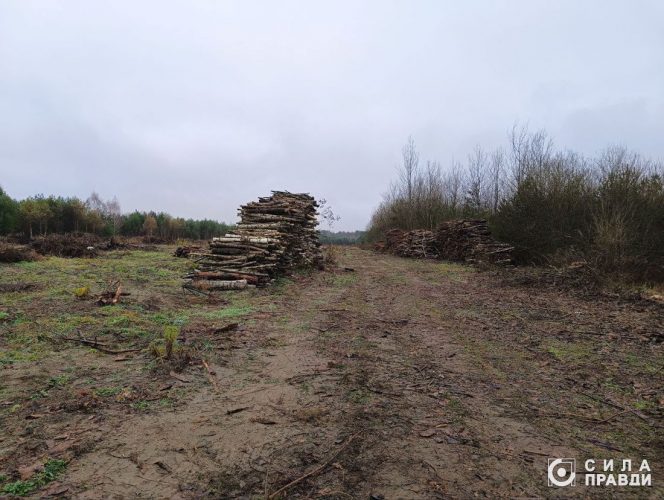
And since then, the forest on these plots has been cut down.
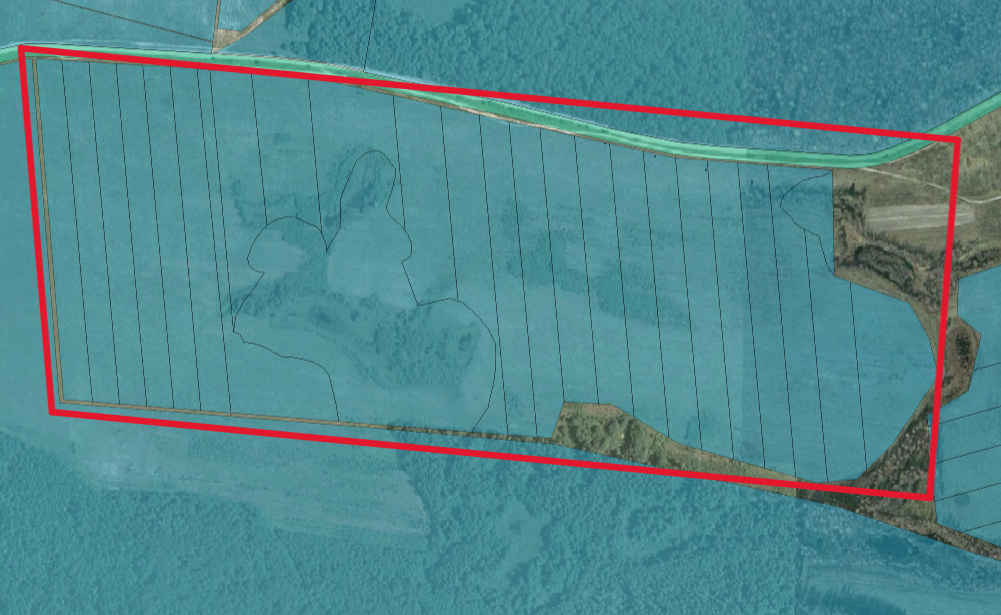
Source: “Syla Pravdy”. Parcels on the cadastral map.
A little about the new owners
Privatization of state forest fund lands is officially prohibited, but somehow they ended up in the hands of private individuals. Journalists from "Sila Pravdy" tried to find out from the new owners how they managed to do this.
DJ Artem Budchuk, who received one of the plots together with his ex-wife, decided not to provide any information:
"Look, I'm not going to comment on this situation. I have no desire to do so."
Yuriy Shnaideruk, owner of the auto parts company Ethnokar, responded:
"This is a very complicated issue and a very complicated situation. We could talk about it for a long time. That's all I can say right now."
Ruslan Laganovsky, an entrepreneur from Boratyn, and his daughter Marina also received plots of land. However, this year they moved abroad. They shed some light on how they found out about the "distribution of forests."
– What were you going to do on those plots? – the journalists asked.
– Well, God only knows what we wanted to do. Nothing. There was just an opportunity, so that's it…
– And how did you find out that this forest was being distributed?
– Through the head of the village council, – Lahanovskyi replied.
Among the new owners is also a resident of the Zaturtsi community, a volunteer since the days of the Anti-Terrorist Operation (ATO), Taras Makushynskyi, who is still defending the country. His mother Valentyna explained to journalists how her son managed to obtain land:
“My brother is the local headman and it just happened that way. He said, listen, Taras, at least let’s get you a few hectares there. If it works out, it works out. Because people from Lutsk, who knows who, are taking it, and he has nothing.”
The forest is simply unprofitable for the community
The forest area became privately owned as agricultural land. The local authorities did this quite deliberately. They say that fields are more profitable for them than forests purely in terms of budget revenue.
"The forests also pay us rent, but it is small. And the land tax that people pay for their plots is higher. Therefore, it was obviously profitable for the village council to have the land as agricultural land and in the hands of the people," said Yurii Kovalchuk, head of the Zaturtsi community.
Collectors of other people's plots
Within a few months, the forest plots, fragmented among various owners, began to end up in the hands of Olga Boyarchuk, the wife of Petro Boyarchuk, a lawyer from Lutsk. He told journalists that the purchase and registration of the plots in his wife's name was his initiative.
“We bought about 10 plots, I can't recall the exact number. I have a friend, a good acquaintance, who is engaged in farming there. He advised me, said: I’ll help you. I wouldn’t have farmed it myself, you understand, I would have rented it out to someone I know,” said Petro Boyarchuk.
He did not want to disclose exactly who this farmer was, but mentioned that his plots are nearby. The farms "Berezovychi" and "Romashka" are located close to the distributed lands. The name of Roman Voitiuk, a former deputy of the Viyinytska village council, is also connected with them.
The farmer stated that the forest on these plots is self-seeded and emerged on the site of former Soviet collective farms. This is also confirmed by satellite images from past decades.

Source: “Syla Pravdy”. Satellite image from 2011.
Land restitution as a matter for prosecutors
In 2023, prosecutors raised doubts about the legality of the privatization of forest plots. Since 2011, they had belonged to the state forest fund. Therefore, the prosecutor's office appealed to the court to return the land to the state.
"According to information from the state-owned enterprise Lokachagrolis, the land plots were removed from state ownership in violation of land legislation. In addition, according to the act of inspection of plantations conducted by the commission, the land plot is covered with 15-year-old forest crops with an average diameter of 14 cm and a height of 8 m," according to a ruling by the Lokachi District Court.
The owners' defenders are the aforementioned Petro Boyarchuk and Viktor Shevchuk. Incidentally, his number is listed on the door of the Ethnokar company, whose owner also received one of the plots.
The prosecutor's office has already won virtually all of the land in favor of the state. The owners tried to appeal this decision even in the Supreme Court, but it did not consider the case due to its small scale.
"Too late to react"
While the battle for ownership rights was going on, the forest was being systematically cut down.
"The landowners cut it down. Either themselves or by hiring someone else. The finished wood, which is better quality, is definitely not suitable for commercial use, so it was used for firewood. My personal opinion is that the foresters and law enforcement agencies woke up too late," said local mayor Oleksandr Hapyak.
Ironically, one of the deputies who voted to transfer the forest to private hands was forester Ihor Ishchuk. He justifies himself by saying that he simply did not know that there was a forest there.
"As deputies, we don't go out to those areas, you understand. When I was driving there and saw that logging was taking place, I called the police and the police came," commented forester Ihor Ishchuk.

Source: “Syla Pravdy”.
Whose land is it?
At the heart of this whole story lies incorrect data from the State Geocadastre. According to the community, it was its officials who transferred the documents on the agricultural use of the territory.
The then head of the State Geocadastre of Volyn Oblast, Taras Kantor, cannot recall the details of the situation, and the current head, Serhiy Volchok, points to the lack of synchronization between the cartographic documentation of the State Cadastre and the foresters as the probable cause.
"The foresters order the assessment materials from a company in Irpin, and these assessment documents were previously only available to the foresters. We did not see them. It was impossible to predict that there could be a forest on that plot," says Serhiy Volchok.
Since 2019, land outside populated areas has been transferred en masse to communities on the government's initiative. It was only in 2023 that up-to-date information from foresters began to be entered on cadastral maps. Only then did it become clear how much forest had fallen into private hands.
Returning the land will be more difficult
In the spring of last year, the law on bona fide purchasers came into force in Ukraine. According to environmentalists, it could prove fatal to attempts to return such plots to state ownership.
“This law introduced two provisions. First: when the state seeks to sue to reclaim a stolen plot of forest, nature reserve, or architectural monument, it must deposit the full value of the plot. Second: if 10 years have passed, those who stole the forest can legalize their plot. Unfortunately, this law is already being applied in practice. Why? Because the state budget does not have funds to pay these deposits or to carry out expert appraisals of these plots. This amounts to billions of hryvnias during wartime,” says Petro Tiestov, an expert from the NGO ‘Ukrainian Nature Conservation Group’.
EcoPolitic previously discussed the pressing issue of preserving self-seeded and ownerless forests.