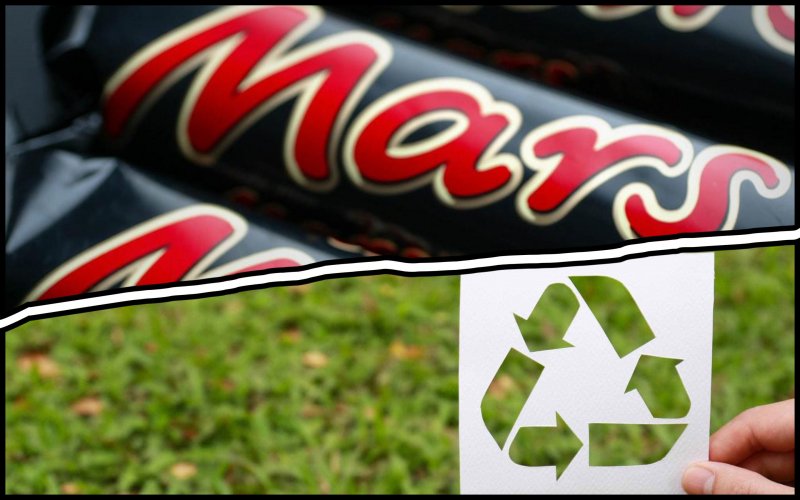
In the UK, Mars Incorporated has replaced traditional plastic packaging for chocolate bars with recyclable paper.
The company said it would make around 200 million bars carbon-neutral every year in the UK, Ireland and Canada, reports the BBC.
Andrew Flood, Tesco's packaging development manager, said the company was delighted to partner with Mars as the initiative aligned with Tesco's own strategy to remove plastic and packaging across the value chain.
It is noted that such an initiative is part of the company's pilot project to test more environmentally friendly packaging materials for chocolate bars.
The material said that the transition to more ecological packaging for Mars bars was a kind of response to the Nestle company, which has been using paper packaging and foil for a number of its products since January 2021.
Mars emphasized that the development of paper packaging with the necessary barrier properties was a difficult task.
Mars' current plastic packaging is said to be non-recyclable, as is the packaging for many chocolate bars and crisps. Such plastic does not decompose, but only breaks down into small particles, polluting the soil and water.
The material added that single-use plastic straws were banned in Great Britain from 2020, and in January 2023 the government introduced a ban on single-use plastic tableware. In addition, in January, France banned the use of single-use plastic in takeaway restaurants.
Earlier, EcoPolitic wrote, that in November 2022 in France, the chain of McDonald's fast food restaurants refused to use disposable tableware.
As EcoPolitic previously reported, the Coca-Cola company changed the green packaging of the Sprite drink to transparent plastic from August 1, 2022 as part of a broader effort aimed at increasing environmental responsibility. Green PET contained an additive that made it impossible to recycle it into new bottles.