The European Carbon Border Adjustment Mechanism (CBAM) could become a source of compensation for environmental damage caused by Russia to Ukraine during a full-scale war.
This could be one of the bypasses for forced compensation if Russia refuses to pay damages voluntarily, because it will not be able to avoid paying the carbon tax, according to the Financial Times.
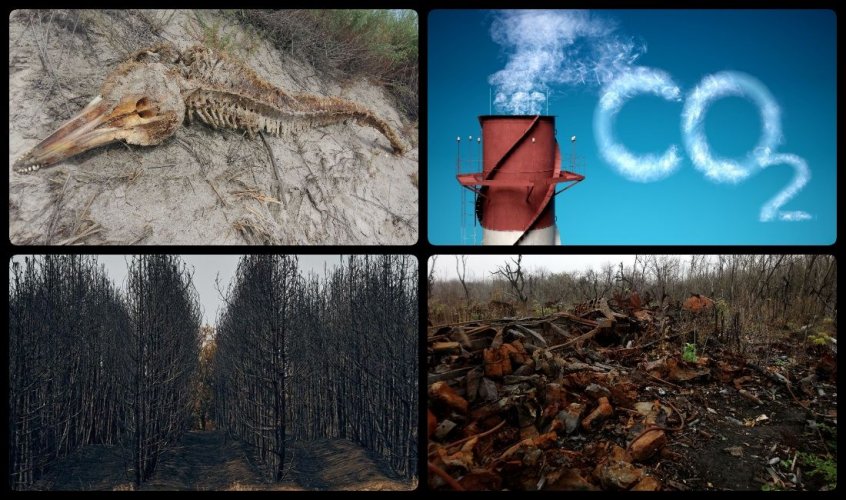
It is noted that currently the ecological damage from Russian aggression has already reached $51 billion. According to the International Wildlife Fund in Ukraine:
- 280,000 hectares of forests were destroyed;
- more than 600 species of animals, 750 species of fungi and plants are under threat of destruction;
- 6 million people have limited or no access to drinking water.
The article emphasized that CBAM provides for an additional fee for carbon emissions contained in certain goods that are imported into the EU. These funds will be directed to three environmental funds, one of which is the Social Climate Fund (SCF). The fund supports decarbonization in developing countries and can become part of the compensation mechanism in Ukraine.
The authors emphasized that trade between the EU and Russia, despite the sanctions, still remains at a high level. Thus, in 2022, exports of iron, steel and aluminum amounted to $8.9 billion, which covers only 4.55% of the total volume of EU imports from Russia.
Compensation through CBAM is said to have two key advantages, namely:
- will reduce the burden on European budgets for the recovery of Ukraine;
- will make Russia pay, even in spite of various scenarios of the development of events and its reluctance.
"Tariffs can not only fund Ukraine's post-war green recovery, but also reduce Moscow's ability to finance its military efforts. CBAM can further contribute to Russia's decarbonization by stimulating investments in sustainable development." - the material says.
Earlier, EcoPolitic wrote, that on April 18, the members of the European Parliament approved agreements on the reform of the Emissions Trading System (ETS), the Carbon Border Regulation Mechanism (CBAM) and the creation of the Social Climate Fund (SCF).
As EcoPolitic previously reported, the Minister of Environmental Protection and Natural Resources, Ruslan Strilets, said that recording and calculating damages from every Russian crime against the environment is necessary for the preparation of high-quality materials for the International Criminal Court.