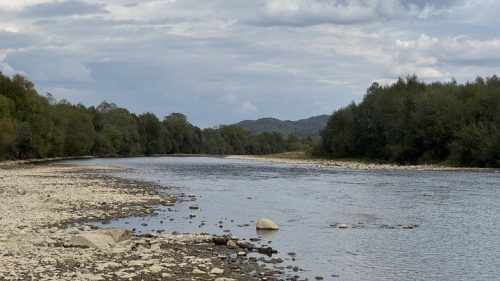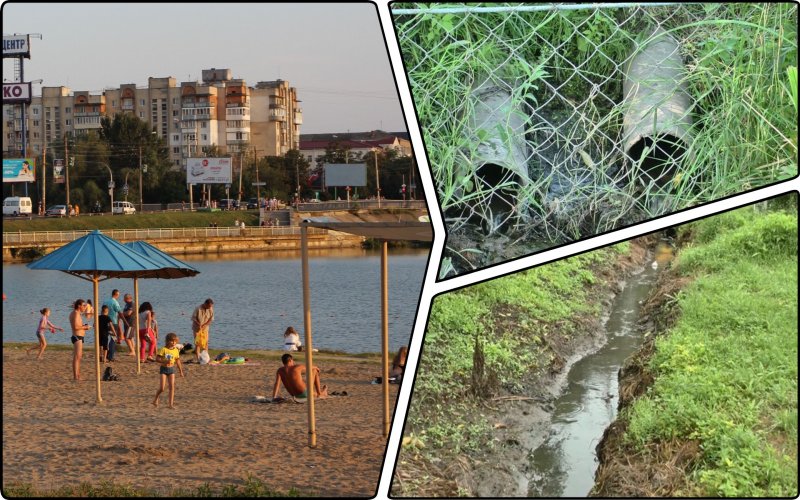
In Khmelnitsky, untreated sewage from the Grechany microdistrict has been polluting the Southern Bug River for years.
This was told by a local resident Viktor Karvan, who has been researching the problem for about five years, according to Public.
Grechany are located on the northwestern outskirts of Khmelnitsky. The former settlement is mostly built up with private houses and industrial quarters. However, there is no centralized sewerage in the microdistrict.
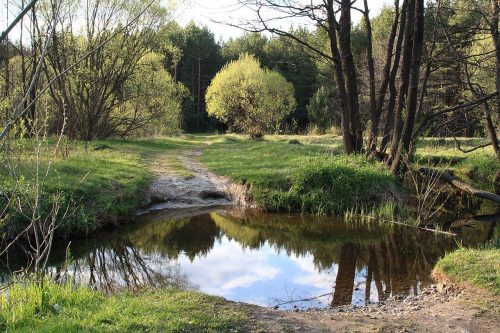
“The beginning of the gutter on Kosciuszko Street. There is a moat where sewage flows from local farmsteads. Further there is one eight-apartment building with a septic tank. But this septic tank is full. It can be seen that the car does not arrive there in any way – everything has been overgrown with weeds since spring. When this septic tank overflows, all the sewage water flows into the ditch,” said Karvan.
He stressed that further drains pass through the streets of Chernoostrovskaya and Lokomotivnaya, which also do not have sewerage. Further sewage follows through the industrial zone, where they hide underground, and again flow out on Shukhevych Lane.
Karvan noted that half a kilometer downstream from the place where the runoff flows into the Southern Bug there is a city reservoir. Behind it, in a cascade, is another reservoir and a city beach.
Rowing, a local athlete, Victoria Furmanchuk, said that there is an unpleasant smell in the place where the sewage flows into the river.
“We don’t drink this water, but other cities drink it. I often go to the water, and every time I see such a sad picture – such gray water flows and the sewer smells. this happens and we seem to agree to this. It seems that we are worthy to bathe in the sewers and, excuse me, in these detergents, "she said.
It is noted that environmental inspectors took samples of soil and water from the stream in Grechany and the Southern Bug. Although they smelled, the samples still need to be analyzed in the laboratory.
The representative of the public organization "Rivers of the Khmelnytsky region" Pavel Vezdenetsky stressed that in Grechany it is necessary to equip the sewerage system so that the runoff does not pollute the river.
According to the Khmelnytskvodokanal sewerage services, in the Grechany microdistrict, 2,031 subscribers are connected to the water supply, and 498 to the sewer system, that is, less than a quarter of households.
Earlier, EcoPolitic wrote, that in the Poltava region, pork faeces polluted the Psel River, which caused a massive fish kill.
As EcoPolitic reported earlier, during a thunderstorm in Zhytomyr on June 20, there was a rupture of the sewer network, sewage from which flooded several private houses and fell into the Teterev River.