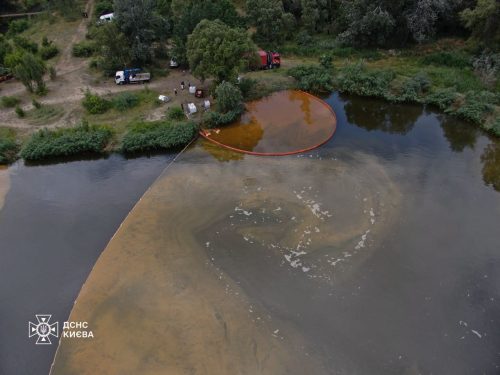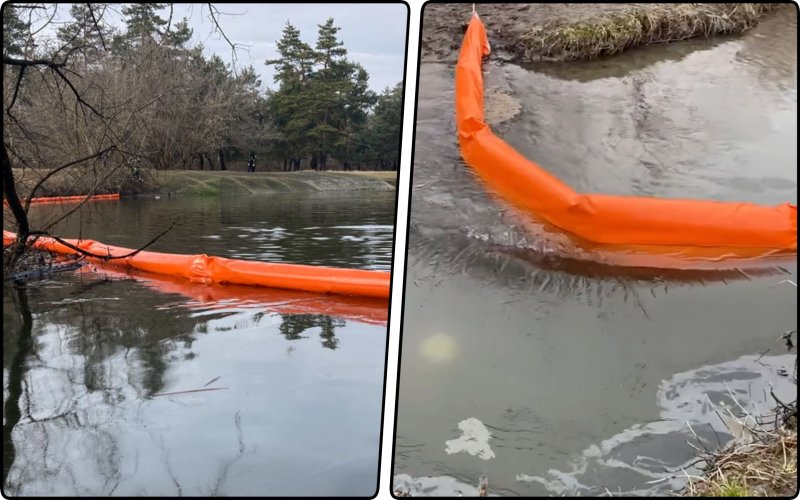
In Kharkiv, protective booms have been installed on rivers polluted by oil products, but the structures on the Nemishlya River have proved ineffective and allow oil slicks to spread further downstream.
Environmental activist Artem Prykhodko wrote about this on his Facebook page and posted a video of the spread of oil slicks.
He emphasized that if environmental inspectors had checked the river and lake adjacent to the attacked oil depot for fuel on the first day, the pollution could have been localized. This would have reduced the scale of the environmental disaster.
Bonds for localization of pollution began to be installed on February 14.
Previously, Prykhodko said that as a result of the enemy shelling of the oil depot on February 9, about 1,500 tons of fuel got into the Kharkiv River. About 30 tons of carbon sorbent will be needed to clean water bodies from pollution, but the only Ukrainian producer has only 2 tons.
As reported by Suspilne, laboratory analysis of water samples showed that the content of oil products in the Nemyshlia River exceeds the norm by 95 times, and in other rivers by 7-8 times.
According to the words Olga Kuznetsova, Acting Head of the State Environmental Inspection of Kharkiv Oblast , Odesa, Dnipro and Poltava are helping the region overcome the consequences of the enemy attack. This is how communities hand over sorbents and plastic barriers.
"The amount of damage caused by the spill of oil products has not yet been calculated. But according to the first analyzes of water samples, there is a very large excess of emissions. Without a doubt, we will calculate the damage caused to water resources when we have all the results of the studies. These damages will be large, because the area of pollution, according to according to preliminary data, it is about 780 thousand m2 of water surface. This is as of February 13, 2024," she said.
As EcoPolitic previously reported, thousands of tons of diesel fuel and gasoline fell into the Lopan, Nemyshlya, and Udy rivers in Kharkiv on February 9 as a result of a hostile attack by kamikaze drones. Environmental activist Artem Prykhodko said that local authorities responded to the pollution, which could lead to an environmental disaster, in 4 days.