The Ministry of Environmental Protection and Natural Resources of Ukraine has developed a draft law "On Electrical and Electronic Equipment and Waste Electrical and Electronic Equipment." It is currently undergoing the final stage of public discussion.
This was reported by the Ministry of Environment.
The Ministry published the draft Law "On Electrical and Electronic Equipment and Waste Electrical and Electronic Equipment" on December 26, 2023. It defines the legal, economic and organizational framework for the management of electrical and electronic equipment and waste electrical and electronic equipment.
The document was developed to ensure environmental safety, prevent the negative impact of this waste on human health and the environment. It envisages the introduction of a system of extended producer responsibility, the establishment of separate collection and recycling of waste electrical and electronic equipment, control over their generation and treatment, and the return of secondary raw materials to economic circulation.
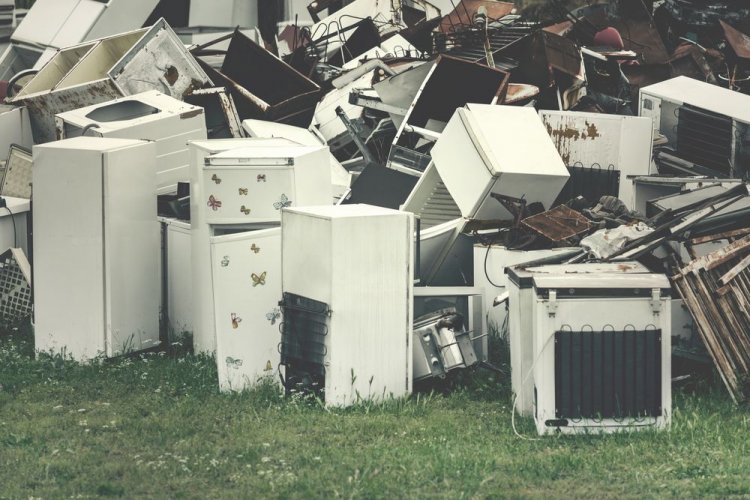
Waste electrical and electronic equipment (WEEE) includes mobile phones, refrigerators, kettles, televisions, electronic cigarettes, toys, sports gadgets, etc.
The main problem is that the rate of growth of the amount of WEEE is 5 times faster than the rate of their processing. For example, in 2022, only 22.3% of e-waste was registered as properly collected and recycled.
Crazy consumer demand for gadgets and other electronics in the world and in Ukraine in particular has caused a real garbage "tsunami". Thus, in 2022, 62 million tons of electronic waste were generated, which can fill 155 million 40-ton trucks. If you put them in one row, it will be enough to go around the Earth at the equator.
An additional negative factor is that the useful life of electrical and electronic equipment is usually quite short, since technologies change rapidly, and repairs by manufacturers are not provided for in most cases.
According to forecasts, in 2030, more than 82 million tons of waste of this type will be generated in the world. This is 33% more than in 2022.
The Global E-waste Monitor estimates that improved e-waste management could yield a global net gain (i.e., including the cost of recycling) of about $38 billion.
At the beginning of the year, EcoPolitic reported that the development and submission of the draft law "On waste electrical and electronic equipment" included in the priority action plan of the Ministry of Environment for June 2024. By the same document, the development and submission of the draft law "On batteries, accumulators and battery and accumulator waste" is scheduled for July.
As EcoPolitic reported in March, Mindovkilya has started the development of the draft law "On batteries and accumulators".