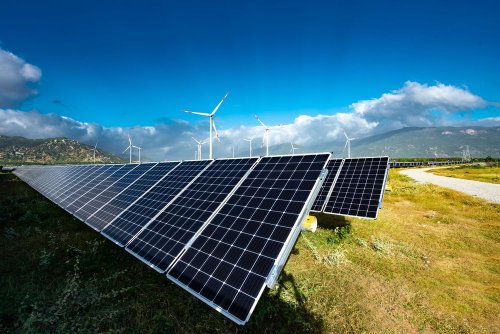
A study by the non-profit organization Environmental Progress showed that the UN Intergovernmental Panel on Climate Change (IPCC) has been underestimating the carbon footprint of solar panels manufactured in China by 3-5 times for about 10 years.
The carbon footprint of solar panels is about 48 grams of CO2 per kWh, while those made in China are 170-250 grams of CO2 per kWh, according to The Epoch Times.
It is noted that the IPCC bases its calculations on the European low-carbon supply chain. However, China's manufacturing processes are heavily dependent on coal, and the country produces 97% of the world's solar wafers, which are key components of photovoltaic cells.
The researchers suggested that the underestimation of the carbon footprint could be due to:
- inaccurate modeling due to lack of transparency;
- inaccurate or distorted data from Chinese manufacturers.
Most experts consulted by Environmental Progress agree that China's competitive advantage lies not in an innovative new process, but in the same factors that the country has always used to compete with the West: cheap coal energy, massive government subsidies for strategic industries industry and human labor in poor working conditions," the group's report says.
The material emphasized that the IPCC responded to a request for comment on the report, based on independent calculations.
Earlier, EcoPolitic wrote, that China launched the world's largest unique 1000 MW solar power plant. The solar power plant is located on a reservoir of a salt deposit.
As EcoPolitic previously reported, a study by the UN Intergovernmental Panel on Climate Change (IPCC) found that by the early 2030s and by 2100 will reach 3.2°C C.