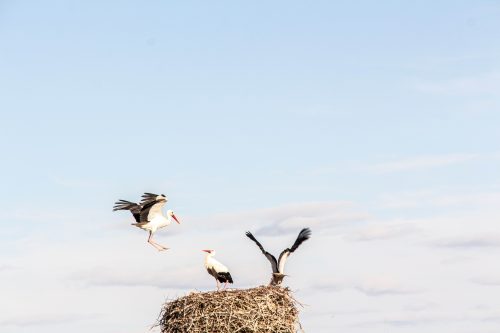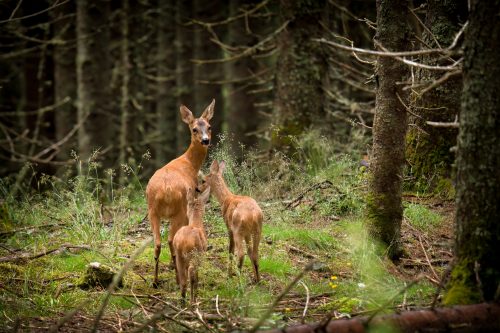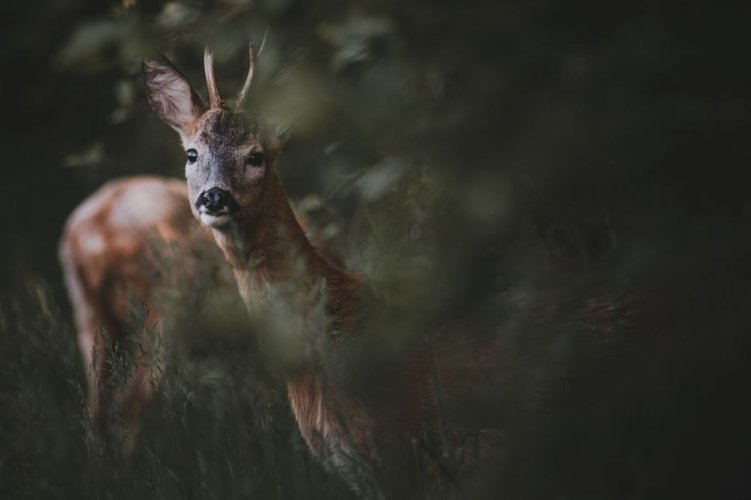
Since the beginning of the full-scale invasion, the number of animals and birds has increased in the Dnipro region, and some unusual fauna have appeared.
This was reported by the Nashe Misto website.
According to the Eastern Forestry Office, the number of birds has increased in the Dnipro region. Last year, 135 thousand birds were recorded, and now there are 143 thousand.
There has also been an increase in the number of fur-bearing animals, with 102 thousand recorded in 2023 and more than 117 thousand this year. The number of ungulates in 2024 has almost doubled.
"Hunting experts associate this not only with warm winters and the ban on hunting, but also with the forced migration of animals, which, like people, try to get away from combat zones," – reports in Eastern forest office .
It is noted that before the beginning of the full-scale invasion, animals began to appear in the Dnipropetrovsk region, which were forced to leave their territory due to the war in the East. At that time, zoologists assumed that the animals had migrated from the Donetsk region.
"Undoubtedly, there have been many more animals. Roe deer, foxes, pheasants have increased. The reasons are obvious: the ban on hunting and the anxiety factor caused by the war. There have been more jackals. If a few years ago these animals were seen sporadically, now jackals are regularly found in Solonyansk, Synelnykovsk, Tomakivskyi districts," says Oleksandr Oliynyk, a leading hunting scientist of the Eastern Forestry Office.
Oleksandr Ponomarenko, a senior researcher at the Dniprovsko-Orilsky nature reserve, notes that the war also affected the logistics of bird migrations.
"Of course, the war made its adjustments. Winged migrants are frightened by shelling. For example, geese have drastically adjusted their logistics. Previously, their migrations were massive, but now only individual flocks are observed. Perhaps the cautious birds fly around the areas of hostilities just in case," says Ponomarenko.
As EcoPolitic previously reported, on the territory of the Chornobyl Nature Reserve, not far from Lubyanka, a species of large predatory mammal new to Polissia was recorded – a jackal.