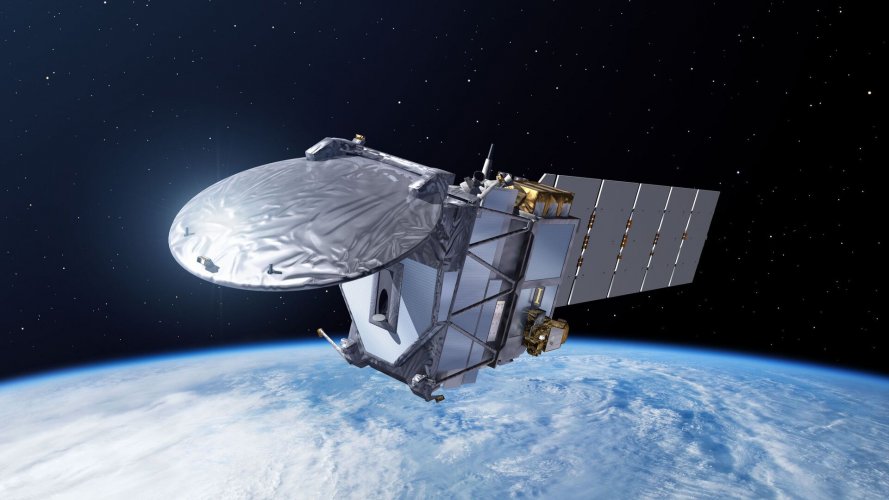
On May 29, the European-Japanese EarthCARE satellite went into Earth orbit. It will help scientists to study clouds and their impact on climate change.
This was announced by SpaceX, whose Falcon 9 rocket delivered the device into space.
Liftoff of @ESA_EO 's EarthCARE! pic.twitter.com/8vХРь3Ии1АА
— SpaceX (@SpaceX) May 28, 2024
The 2.3-tonne satellite was developed by the European Space Agency in collaboration with the Japan Aerospace Exploration Agency JAXA. It uses laser and radar to study the atmosphere. The device will collect data on the formation of clouds, aerosols and radiation from the surface and atmosphere of the Earth. The project, in which the UK plays a significant role, aims to provide vital information to tackle global warming.
As you know, some low-level clouds cool the planet, while others act like blankets at high altitudes. This is one of the big uncertainties in computer models used to predict climate change from rising greenhouse gases.
Scientists predict that cloud cover will decrease in the future, which will lead to clouds reflecting less sunlight into space, more will be absorbed by the Earth's surface, and this will increase global warming.
The huge technical challenge was getting all the tools to work as intended. It took 20 years from mission approval to launch.
Previously, EcoPolitic published photo of space debris, which was taken by a Japanese satellite during a space “cleanup” mission.